Introduction
Craft beer shelves have never been more crowded. U.S. craft brewers generated an estimated $28.8 billion in retail value in 2024, even as production volume dipped slightly, according to the Brewers Association.
That means more brands are fighting for the same cooler space and the same few seconds of shopper attention.
Yet many brewers still default to pre-printed cans or glued paper labels without realizing those choices create real production headaches: peeling in coolers, slow reorders, and limited design flexibility. Pressure-sensitive labels solve those problems directly.
Here are five practical reasons breweries are switching.
TL;DR
- Pressure-sensitive labels are self-adhesive stickers that stick to cans with no glue required
- They resist moisture and cold far better than paper glue-applied labels
- Digital printing pairs with them to make small-batch and seasonal runs affordable
- Low minimum order quantities let brewers test flavors without excess inventory
- The right label choice affects branding, cost, and how fast you get to market
What Are Pressure-Sensitive Beer Can Labels
A pressure-sensitive label is a self-adhesive sticker built from three layers: a printed face stock, an adhesive layer, and a release liner. Peel it off the liner, press it onto the can, and it's on. No wet glue, no drying time, no ordering pre-printed cans months in advance.
That's different from the two older approaches:
| Method | How It Works | Main Drawback |
|---|---|---|
| Paper glue-applied labels | Wet adhesive applied at the filling line | Prone to wrinkling and peeling |
| Pre-printed (lithographed) cans | Decoration baked into the can itself | Ordered in bulk with long lead times |
Pressure-sensitive labels show up most often at craft breweries running small-to-mid batches, seasonal releases, and multi-SKU product lines. They solve real branding, durability, and speed-to-market problems that catch up with growing breweries fast.
5 Reasons to Use Pressure-Sensitive Beer Can Labels
Each reason below ties to something you can measure: cost, speed, durability, brand impact, or sustainability. None of it is just about looking nice on a shelf.
Reason 1: Superior Durability in Wet, Cold, and Rugged Conditions
Pressure-sensitive labels use adhesives and films engineered to handle moisture, condensation, and abrasion. That matters during transport, cold storage, and hours spent sitting in an ice bucket at a tasting event.
Paper glue-applied labels don't hold up nearly as well. Wet glue softens when it meets condensation, and the result is labels that wrinkle, bubble, or slide right off the can.
Shelf appearance carries real weight with buyers. A 2025 eye-tracking study of craft beer shoppers by Quad found that 72% said a beer's appearance made them more likely to buy it, and 84% walked in without a specific beer already in mind. A label that survives the cooler protects that first impression instead of undoing it.
Breweries shipping direct-to-consumer or distributing through grocery and retail feel this benefit most, since their cans face extended handling and refrigeration before anyone opens one.
Reason 2: Greater Design Flexibility and Premium Customization
Pressure-sensitive labels can be die-cut into custom shapes and finished with fluorescent inks, metallics, foil accents, tactile varnish, or clear film for a "floating label" look. Pre-printed cans, by contrast, are limited by Pantone color ranges and ink transparency issues baked into the can-decoration process.
Tactile and premium finishes tend to influence how shoppers perceive quality, even outside the beer aisle. That perception boost is exactly why limited-edition and seasonal brews lean on standout label design to drive trial purchases.
Getting that design right on press run after press run requires tight color control. GMS Industries uses ICC color profiling alongside a Fuji Final Proof contract proofing system and GMG workflow, which lets brewers lock in a color standard once and match it reliably on every reorder, with no surprises when a seasonal IPA label reprints six months later.
Reason 3: Cost-Effective for Small-Batch and Limited-Release Brews
Digitally printed pressure-sensitive labels carry low setup costs and low minimum order quantities compared to cut-and-stack labels or pre-printed cans. That opens the door for:
- Testing a new flavor without committing to a massive print run
- Running a one-off label for a taproom anniversary or festival
- Swapping seasonal artwork without holding leftover inventory
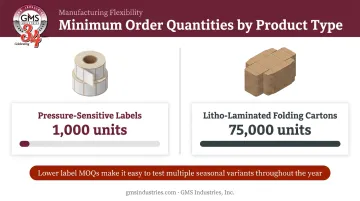
GMS Industries sets its pressure-sensitive label MOQ at 1,000 labels — a fraction of the 75,000-unit commitment required for litho-laminated folding cartons. For a brewery testing three seasonal variants a year, that difference determines whether the project is even feasible.
Small and mid-sized breweries juggling tight budgets and frequent SKU changes stand to gain the most from that flexibility.
Reason 4: Faster, Simpler Application Across Can Sizes
Pressure-sensitive labeling equipment ranges from tabletop applicators to fully automated wrap systems. Either way, setup and training take far less time than calibrating a glue-based line.
These systems also switch between can sizes and shapes quickly. A brewery running a 12 oz seasonal batch in the morning and a 16 oz flagship can in the afternoon doesn't need to retool the whole line — just swap the label roll.
Breweries with lean production staff, or anyone rotating between multiple beer styles on the same shift, benefit most from that flexibility.
Reason 5: Better Alignment with Sustainability Goals
Pressure-sensitive labels are often produced on recyclable face stocks, and their adhesion is strong enough to reduce label loss during recycling sorting. That matters because loose labels floating off in transit or during processing create contamination problems at the recycling facility.
Consumer expectations back this up. According to a Can Manufacturers Institute report, roughly 84% of U.S. consumers expect packaging to be easy to recycle, often looking for recycled content too.
Not every label construction is equally recycling-friendly, though. Industry guidance from the Aluminum Association notes that certain plastic labels and adhesives can dilute aluminum scrap value if they aren't designed for easy separation. The practical takeaway: choose a face stock and adhesive combination built for clean removal, not just "recyclable" in name only.
Brands marketing an eco-conscious position, or selling into states with strict recycling rules, gain the most from this advantage.
What Happens When Breweries Skip Pressure-Sensitive Labels
Sticking with paper labels or pre-printed cans creates predictable headaches down the line:
- Labels peel in coolers, leaving cans that look damaged before a customer ever cracks one open
- Print quality drifts between runs, especially without a locked color standard
- Reprint costs climb every time a design tweak forces a full new can order
- Limited color and finish options on pre-printed cans make small-batch brands look generic next to competitors using foil accents or die-cut shapes
- Large pre-printed can commitments leave breweries stuck holding excess inventory when a seasonal SKU sells out or a trend shifts
None of these are hypothetical. They're the day-to-day friction that pushes growing breweries toward a more flexible label approach.
How to Get the Most Value from Pressure-Sensitive Labels
Value increases when a brewery brings its label partner in early, before final artwork is locked. That means aligning three things at once: the art itself, the die-cut shape, and the adhesive type, all matched to how the can will actually be used (cooler storage, long-distance shipping, or straight to a retail shelf).
Material selection should follow the same logic:
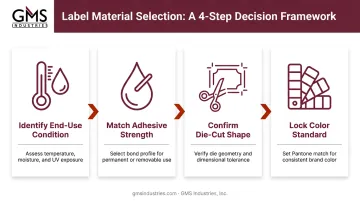
- Identify the end-use condition: refrigeration, high humidity, or outdoor festival exposure all stress labels differently
- Match adhesive strength to that condition: a label built for shelf display won't necessarily hold up to weeks of cold storage
- Confirm die-cut shape early: reworking a shape after plates or dies are cut adds cost and delay
- Lock a color standard before the first run: so seasonal reorders match the original approved proof
Working with a full-service manufacturer removes most of the guesswork. GMS Industries operates flexographic label presses (Allied 300 Series and Mark Andy 830) alongside Bobst die-cutting equipment and an in-house prepress team, giving brewers one point of contact from concept through production.
As a family-owned business running since 1989, GMS treats label projects as an ongoing partnership, which matters when a brewery adds new SKUs every season.
Conclusion
Pressure-sensitive labels give breweries a combination of durability, design freedom, and cost efficiency that paper labels and pre-printed cans simply can't match on their own. Those advantages don't stay flat, either — they compound as a brewery adds SKUs, launches seasonal releases, and expands into new distribution channels.
Treat label strategy as an ongoing brand and operations decision, one that evolves with each new SKU that GMS Industries helps you bring to market. The breweries winning shelf space right now are the ones that can move fast without sacrificing quality.
Frequently Asked Questions
What are pressure-sensitive beer labels?
They're self-adhesive labels made of face stock, adhesive, and a release liner that stick to cans or bottles with light pressure. Brewers favor them for their durability and design flexibility.
What is the difference between pressure-sensitive and shrink sleeve labels for beer cans?
Pressure-sensitive labels are applied as a sticker covering part of the can. Shrink sleeves wrap fully around the can using heat, offering complete coverage but at higher cost and application complexity.
Are pressure-sensitive labels waterproof for coolers and ice buckets?
Most pressure-sensitive label materials resist moisture and won't dissolve or peel in wet, cold environments, unlike standard paper glue-applied labels. Exact performance depends on the specific film and adhesive chosen.
What is the minimum order quantity for pressure-sensitive beer can labels?
Digitally printed pressure-sensitive labels typically carry low minimums — GMS Industries, for example, sets its MOQ at 1,000 labels. Always confirm exact MOQs with your label supplier before finalizing a run.
Can pressure-sensitive labels be used on both bottles and cans?
Yes. Pressure-sensitive labels adhere to glass, aluminum, and plastic, making them versatile across a brewery's full packaging lineup, from flagship bottles to seasonal cans.
Are pressure-sensitive labels environmentally friendly and recyclable?
Many are made with recyclable face stocks and adhere securely enough to reduce label loss during recycling sorting. Choosing a construction designed for clean separation matters more than the label type alone.